
Tripolis: a Roman city on the Meander with almost no one in it
Half an hour from Pamukkale, near Buldan, a large Roman and Byzantine city sits above the Meander river: a stadium, a council house, painted churches and a rare covered bazaar, usually with no crowds at all.
Updated
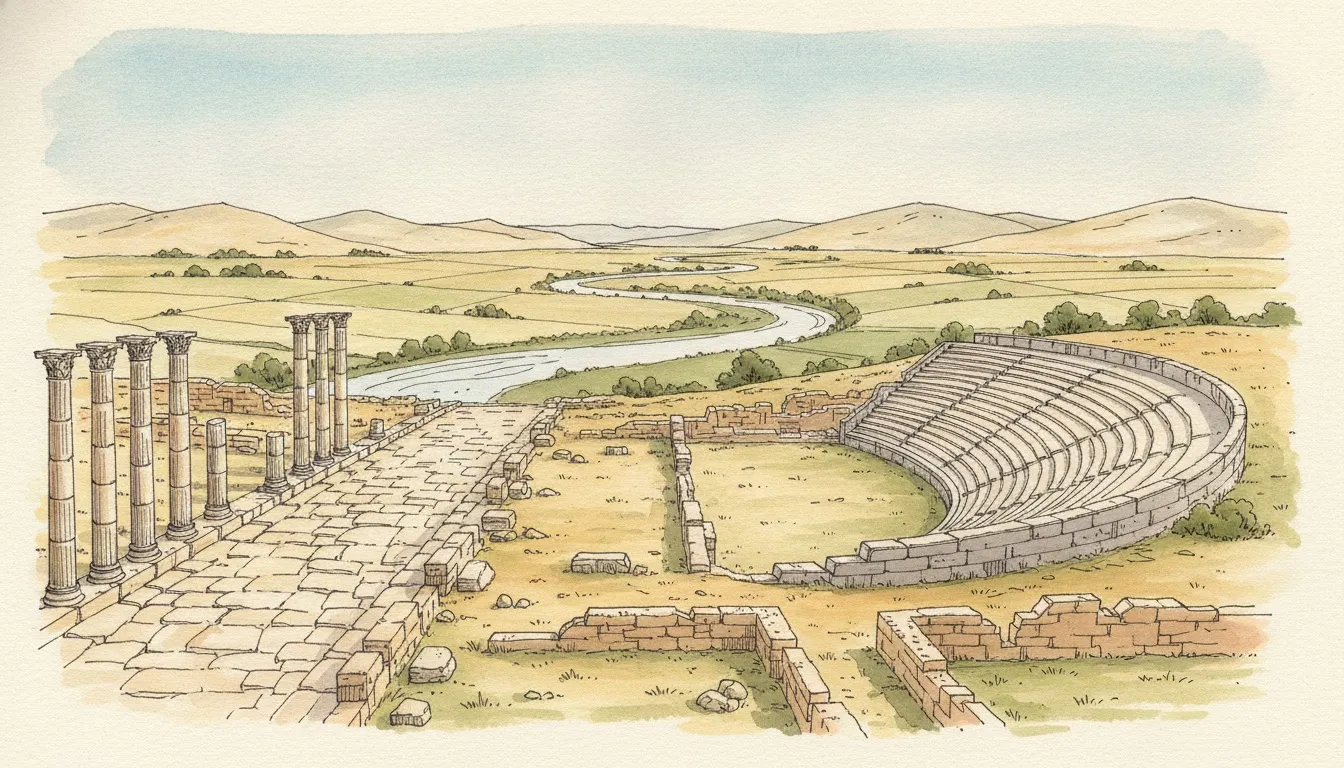
Some ruins make you queue. Tripolis makes you wonder where everybody is. Half an hour northwest of Pamukkale, on the northern bank of the Meander river near the town of Buldan, a whole Roman city spreads across the fields, and on most days you will share it with almost no one. Where Pamukkale and nearby Hierapolis draw more than a million visitors a year, Tripolis stays quiet, an active dig that most travellers pass without knowing it is there.
What you’ll find
Tripolis grew rich on the trade routes of the Meander valley, and the ruins still show it. The site is being excavated, and each season uncovers a little more.
- A stadium, long and narrow, where the city once held its games and gatherings.
- A bouleuterion, the stone council house where the city’s affairs were argued out.
- Early Byzantine churches, some still carrying traces of colored frescoes on their walls.
- A covered bazaar, unusually well preserved, the kind of roofed market street that rarely survives anywhere in the ancient Mediterranean.
A colonnaded street runs through the heart of it, columns still standing along the old paving, with the hills of the valley behind. It is the same landscape as Laodikeia across the plain, the human, historical side of the country whose geology you meet at the white terraces.
Getting there and what to expect
Tripolis sits off the road from Denizli toward Buldan, about 20 km from Pamukkale and 41 km from Denizli, just east of Yenicekent village. With your own car it is a simple 30 minute run, and it pairs naturally with a longer day heading out toward Buldan or the Çal vineyard route.
Come prepared, because the site is refreshingly undeveloped. There is no cafe, no visitor center and usually no toilets, so bring your own water, sun protection and shoes you can walk uncut ground in. Entry has been free in recent seasons. What you trade in comfort you get back in space: room to walk, quiet to hear, and the rare feeling of having an ancient city to yourself.
Who it’s for
Tripolis is not a headline sight, and that is exactly its appeal. If your idea of a good day is a big, real ruin with time to wander and no one hurrying you along, put it on the list. Fit it into a slower third day around Denizli, when the terraces are behind you and you are ready for the region’s quieter half.
Where these places are
Distances from the travertine entrance. Tap a marker to open its guide.
All places on this map
- The Antique Pool (Cleopatra's Pool)
- The travertine terraces of Pamukkale
- Hierapolis Ancient City · 0.7 km from the terraces
- Karahayıt: the red thermal springs · 5.1 km from the terraces
- Laodikeia: the ruined city across the valley · 9.9 km from the terraces
- Denizli: the working city next to Pamukkale · 15.9 km from the terraces
- Tripolis: a Roman city on the Meander with almost no one in it (Guide coming soon) · 19.8 km from the terraces
- Kaklık Cave: Pamukkale underground · 24.2 km from the terraces
- The Çal vineyard route: high-altitude wine an hour from Pamukkale (Guide coming soon) · 29.6 km from the terraces
Guided tours and day trips in Pamukkale
Skip the planning. Pick a theme below to compare guided tours, balloon rides and day-trip packages, many with instant confirmation and free cancellation.
- Pamukkale + Hierapolis day tour
- Hot air balloon ride
- Sunset tour
- Day trip from İzmir
- Day trip from Antalya
- Cleopatra antique pool
Coming out this way?How to get there
Common questions
What is Tripolis?
Tripolis was a Roman and early Byzantine city on the northern bank of the Meander (Menderes) river, near the modern town of Buldan. Its ruins sit just east of Yenicekent village. Once a prosperous trading city, it is now a quiet, active excavation with a stadium, a council house, several churches and a remarkably well preserved covered bazaar.
How far is Tripolis from Pamukkale?
About 20 km to the northwest, roughly a 30 minute drive. It sits off the Denizli to Buldan road, which makes it an easy detour on a day heading out toward the wine country or the weaving town of Buldan.
Is Tripolis worth visiting?
If you enjoy walking through real ruins without a crowd, yes. It has none of the queues of Pamukkale or Hierapolis. You often have the colonnaded street and the theatre almost to yourself. It suits travellers who like history at a slow, quiet pace more than headline sights.
Is there an entrance fee, and what should I bring?
Entry has been free in recent seasons, though this can change. There are almost no services on site, no cafe and no toilets, so bring water, sun protection and comfortable shoes. Early morning or late afternoon light is kindest for both walking and photos.