
Karahayıt: the red thermal springs
Five minutes north of Pamukkale the thermal water runs rust-red with iron, and the town around it is built on spas. Why it's worth an hour, and why it's where a lot of people actually sleep.
Updated
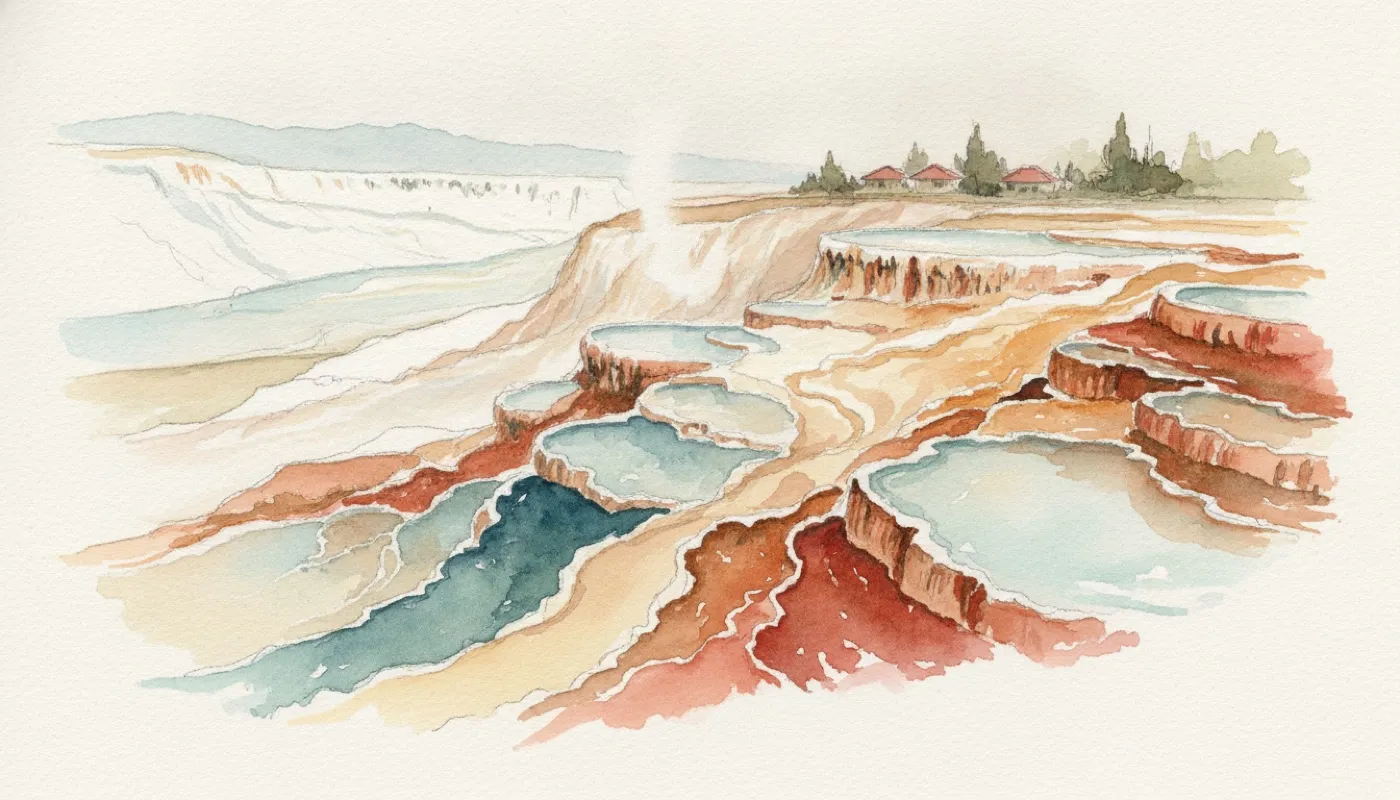
Drive five minutes north of the white terraces and the colour flips. At Karahayıt the same underground thermal system surfaces, but this water carries more iron and minerals, so instead of chalky white it paints the rock in deep rust-red, orange and ochre. Locals call it the red spring, kırmızı su, and it is the mirror image of Pamukkale: same heat, same source, opposite colour.
The red water
In the middle of town there is a public red-water fountain and terrace where you can see the staining up close, free to visit and quick to take in. It is not a vast landscape like the terraces; it is a curiosity, a vivid ten-minute stop that makes the geology click. The water is warm and heavily mineralised, and the smell of iron hangs faintly in the air.
Where the spa hotels are
Karahayıt’s real role in a trip is as a base. This is where most of the region’s thermal hotels cluster, resorts built around warm mineral pools, so a lot of people who come to see Pamukkale actually sleep here and drive to the terraces in the morning.
- Choose Karahayıt for a thermal-pool hotel and a calm, resort feel.
- Choose Pamukkale village for the closest walk to the terrace gate and simpler guesthouses.
- Either way you are only minutes from the site, so the decision is about the kind of evening you want, not the logistics.
If you are still weighing it up, it comes down to the evening you want: a thermal-pool resort in Karahayıt, a simple guesthouse steps from the gate in Pamukkale village, or a city base in Denizli.
Fitting it in
Karahayıt pairs naturally with the terraces: see Pamukkale in the soft morning or evening light, and drop into Karahayıt for a thermal soak on the same loop. On a two-day trip it is an easy add-on rather than a separate expedition, which is exactly what makes the wider Denizli region so rewarding once you are already here.
Where these places are
Distances from the travertine entrance. Tap a marker to open its guide.
All places on this map
- The Antique Pool (Cleopatra's Pool)
- The travertine terraces of Pamukkale
- Hierapolis Ancient City · 0.7 km from the terraces
- Karahayıt: the red thermal springs · 5.1 km from the terraces
- Laodikeia: the ruined city across the valley · 9.9 km from the terraces
- Denizli: the working city next to Pamukkale · 15.9 km from the terraces
- Tripolis: a Roman city on the Meander with almost no one in it (Guide coming soon) · 19.8 km from the terraces
- Kaklık Cave: Pamukkale underground · 24.2 km from the terraces
- The Çal vineyard route: high-altitude wine an hour from Pamukkale (Guide coming soon) · 29.6 km from the terraces
Guided tours and day trips in Pamukkale
Skip the planning. Pick a theme below to compare guided tours, balloon rides and day-trip packages, many with instant confirmation and free cancellation.
- Pamukkale + Hierapolis day tour
- Hot air balloon ride
- Sunset tour
- Day trip from İzmir
- Day trip from Antalya
- Cleopatra antique pool
Coming out this way?How to get there
Common questions
What is Karahayıt and how is it different from Pamukkale?
Karahayıt is a small spa town just north of Pamukkale. Its spring water is rich in iron and other minerals, so instead of Pamukkale's white travertine it stains the rock deep rust-red and orange. Same thermal region, opposite colour.
Is Karahayıt worth visiting?
For an hour, yes, especially if you like the idea of a thermal soak. The public red-water fountain is free to see, and the town is full of thermal hotels with mineral pools. It is more of a spa stop than a sightseeing one.
Should I stay in Karahayıt or Pamukkale?
Karahayıt suits you if you want a thermal hotel with pools and a quieter, resort feel. Pamukkale village puts you closer to the terrace gate and cheaper guesthouses. Both are within a few minutes of the site.