
Denizli food: what to actually eat
Denizli's kitchen is honest Anatolian home cooking, not a starred gastronomy tour. The signature oven-baked kebab, why the famous rooster is a symbol and not a dish, and where to find a good plate near Pamukkale.
Updated
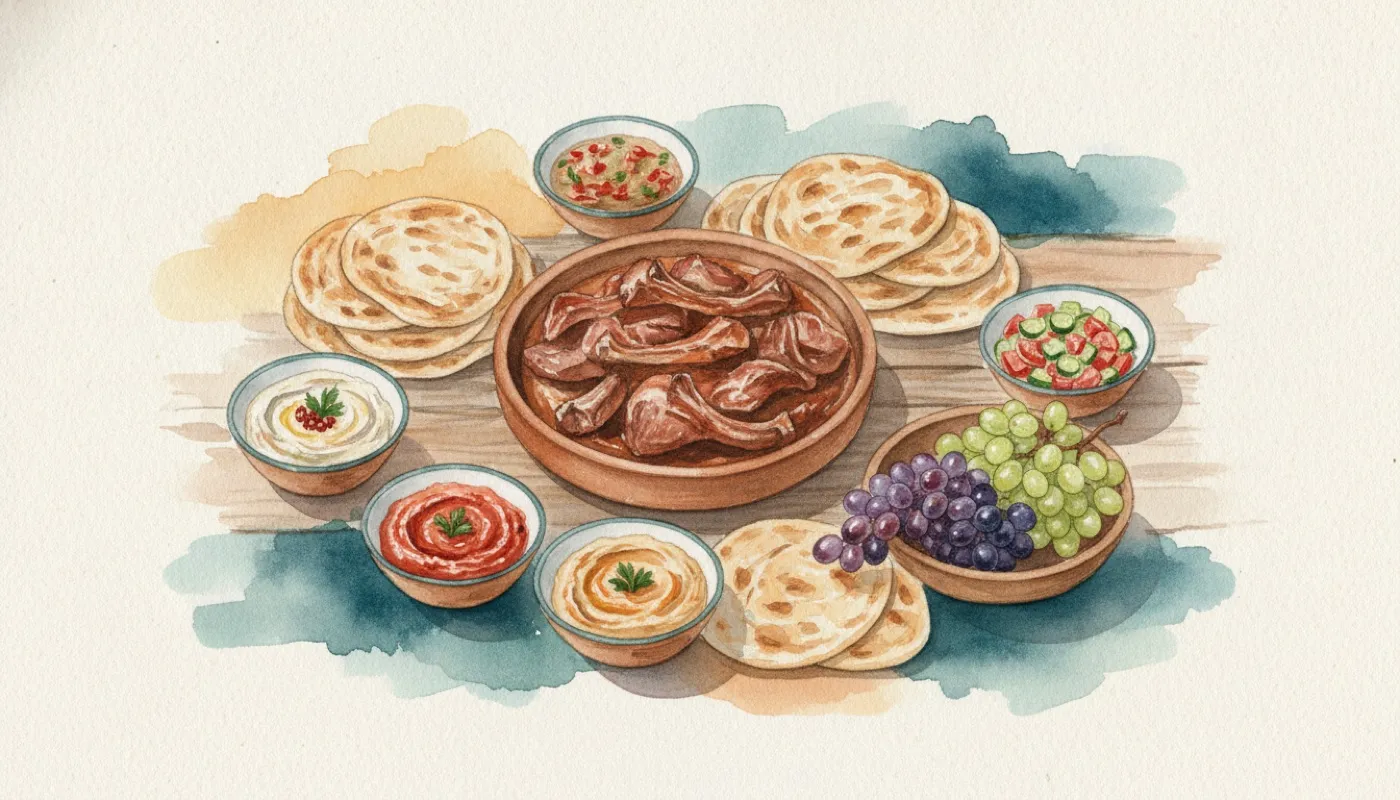
Denizli is not a place people come to eat. They come for the white terraces and the ancient pool, and the food gets treated as an afterthought. That is a shame, because what lands on the table here is honest, unfussy Anatolian home cooking, the kind you eat slowly and without ceremony. No white tablecloths, no tasting menu. Just lamb that has been in the oven since morning, vegetables from the valley, and bread you tear with your hands.
Denizli kebabı: the signature plate
The dish carrying the city’s name is Denizli kebabı, and the first thing to get straight is what it is not. It is not a skewer of grilled meat. Here the kebab means lamb slow-cooked in an oven or a güveç, a clay pot, until it is soft enough to come apart with a fork. The meat roasts gently in its own fat and juices, so the plate arrives rich, tender and unhurried rather than charred and smoky.
- Expect it served simply, with bread and rice or bulgur alongside.
- Think roast, not grill: this is a dish built on time, not flame.
- It is filling and generous, a proper sit-down lunch rather than street food.
The rooster is a symbol, not a plate
You will see the Denizli rooster (Denizli horozu) everywhere: on the main square, on shop signs, on the city’s own logo. It is a real breed, prized for an unusually long, ringing crow that can last many seconds, and it stands as the emblem of the whole province. But it is not food. Nobody puts it on a plate. If a visitor half-expects a “rooster dish,” this is the gentle correction: it is a mark of local pride, a piece of Denizli’s identity, not lunch.
What else lands on the table
Beyond the signature kebab, the region leans on the same slow, homely instincts:
- Tandır: lamb cooked low and long in a pit-style tandır oven, another patient roast.
- Keşkek: wheat and meat pounded together into a thick, comforting porridge, traditionally a wedding and feast dish.
- Sac kavurma and güveç: meat and vegetables cooked on a domed sac griddle or in a clay pot.
- Tangy, herb-forward village stews: seasonal ekşili and otlu dishes that change with what the valley is growing.
- Sweets: regional dough-and-syrup sweets to finish, simple and generous rather than delicate.
North and west of the city, toward Çal, you cross into vineyard country: table grapes, pekmez (grape molasses) and a quiet local wine culture. The Çal wine road is really its own outing rather than part of a food crawl.
Where to eat, and how it fits your trip
You do not need a plan or a reservation, just a willingness to eat where locals eat.
- In Pamukkale village: the easiest option if you are sleeping by the terraces. Many guesthouses cook a homely fixed dinner, and there are small village eateries within walking distance.
- In central Denizli: more choice and the older, more traditional lokantas, worth it if you are basing yourself in the city. See the Denizli city guide for how to spend the surrounding time.
Food here is a low-key pleasure, not the reason you came, and that is exactly its charm. Fit a proper Denizli kebabı lunch around your terrace visit and it becomes part of the wider things to do around Pamukkale, an honest meal in an honest region.
Where these places are
Distances from the travertine entrance. Tap a marker to open its guide.
All places on this map
- The Antique Pool (Cleopatra's Pool)
- The travertine terraces of Pamukkale
- Hierapolis Ancient City · 0.7 km from the terraces
- Karahayıt: the red thermal springs · 5.1 km from the terraces
- Laodikeia: the ruined city across the valley · 9.9 km from the terraces
- Denizli: the working city next to Pamukkale · 15.9 km from the terraces
- Tripolis: a Roman city on the Meander with almost no one in it (Guide coming soon) · 19.8 km from the terraces
- Kaklık Cave: Pamukkale underground · 24.2 km from the terraces
- The Çal vineyard route: high-altitude wine an hour from Pamukkale (Guide coming soon) · 29.6 km from the terraces
Guided tours and day trips in Pamukkale
Skip the planning. Pick a theme below to compare guided tours, balloon rides and day-trip packages, many with instant confirmation and free cancellation.
- Pamukkale + Hierapolis day tour
- Hot air balloon ride
- Sunset tour
- Day trip from İzmir
- Day trip from Antalya
- Cleopatra antique pool
Coming out this way?How to get there
Common questions
What is Denizli kebabı?
Denizli kebabı is the region's signature dish: lamb slow-cooked in an oven or a clay pot until it falls off the bone, rich and tender. It is not a skewered shish kebab. The whole idea is slow oven and güveç (clay-pot) cooking, so expect a soft, roasted plate rather than grilled meat on a stick.
Where do you eat Denizli's local food?
In the lokantas, the family-run restaurants, of central Denizli, and in the small guesthouse kitchens and eateries of Pamukkale village. The village is easiest if you are sleeping by the terraces. The city has more choice and the older, more traditional kitchens.
Can you eat the Denizli rooster?
No, and that is rather the point. The Denizli rooster is the city's living symbol, a breed famous for its long, ringing crow, celebrated on statues and logos. It is a mark of local pride, not a menu item. If you see it everywhere, that is culture, not lunch.