
Pamukkale Thermal & Boutique Hotels Guide
A practical guide to Pamukkale thermal and boutique hotels, with locations, 2026 price ranges, pool access, seasonal timing, and booking details.
Updated
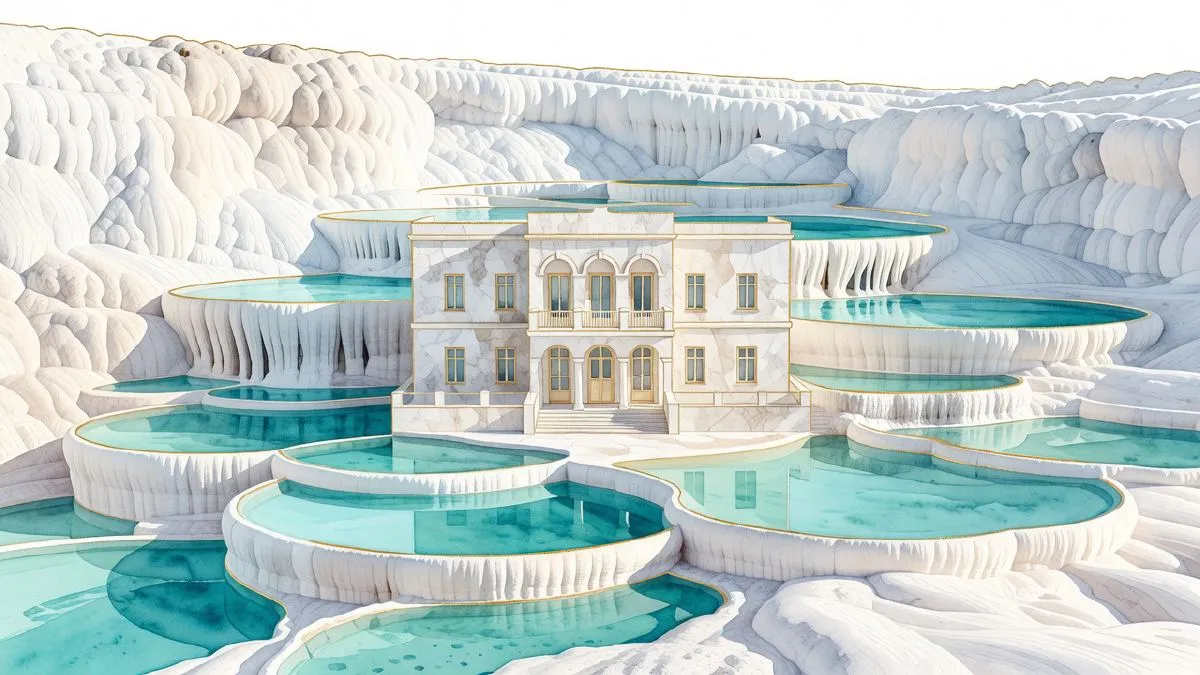
A thermal or boutique hotel in Pamukkale usually costs €80–€300 per night in the 2026 season, depending on the room and month, and places you either within 0–500 metres of the travertines or about 3–4 kilometres away in Karahayit. One or two nights is enough for most visitors. It is worth paying more for a thermal hotel if you plan to use the pool or spa; it is less worthwhile if you only need a bed before visiting the site. Prices and facilities change, so check current rates, pool access and cancellation terms before booking.
Why choose a thermal or boutique hotel in Pamukkale?
In Pamukkale, choosing a thermal or boutique hotel over a standard room comes down to three things: the water, the timing, and the scale. The village sits almost entirely within a few hundred metres of the travertines, so where you sleep shapes how you experience them, whether you see the white slopes packed with tour groups or nearly empty at golden hour.
Many established thermal hotels here draw their pool water from the same springs associated with the terraces. That matters practically. You can soak in warm mineral water on-site instead of buying entry to another facility every evening, though setups differ by property, and pool access is not always included in the room rate. It is worth confirming this before booking. There is also a recovery angle: visitors spend hours walking barefoot across the travertines. Shoes are not allowed on them, and the surface is rougher than photos suggest. A warm soak afterwards can be useful after a long day on foot. Anyone with a heart condition or high blood pressure should ask their doctor about longer hot-water sessions first.
Overnight guests also have more flexibility around the busiest hours. Day-trippers usually dominate from mid-morning to late afternoon. Staying nearby means walking up at opening time or in the last hour of daylight, when the crowds often thin out. Opening hours can change by season, so check the official information for 2026 before planning an early or late visit.
This category suits three kinds of travellers in particular:
- Couples: Small properties, terrace meals facing the valley and, at some places, rooms with private thermal soaking tubs.
- Wellness-focused visitors: Warm mineral water is the main reason to choose this type of hotel. The water is often associated locally with relief for joints and skin, but medical effects should not be assumed without professional advice.
- Travellers after quiet comfort: Boutique scale means personal service and a slower rhythm, not big-resort entertainment.
If you simply need a bed between two bus connections, the premium for a thermal or boutique property may not make sense. A basic guesthouse can cover that need. The extra cost here is for water, location and pace. To decide which version suits you, start with the location and then check what the hotel actually means by “thermal.”
Which Pamukkale location fits your stay?
Location does more than save you a taxi. In Pamukkale it determines whether you can walk back to your hotel after sunset, soak in a thermal pool before breakfast, or need a car for every move. The two practical bases are Pamukkale village and Karahayit. Denizli city centre is another option, but it works mainly for travellers who prefer city restaurants and transport connections.
| Zone | Distance to travertines | Suitable for | Trade-off |
|---|---|---|---|
| Pamukkale village | 0–500 m | First-time visitors and short stays | More day-trip traffic around midday |
| Karahayit | 3–4 km | Thermal-focused stays and quieter surroundings | Taxi, shuttle or car needed for the main site |
| Denizli centre | 18–20 km | City restaurants and transport connections | Around 25–30 minutes each way by car |
If walking to the travertines in the morning matters, Pamukkale village is the straightforward choice. You can enter early, leave when tour buses fill the terraces, and return to the hotel for a break. The village is small and geared towards visitors to the archaeological site. Evenings are quiet, although the atmosphere is more residential than resort-like.
Karahayit is the thermal district north of Pamukkale. Its water is associated with iron-rich red springs, which give the area its local character. Hotels there tend to have larger grounds and bigger thermal pools. It suits people who plan to spend time at the hotel itself rather than use it only as a base for the ancient site. The distance is manageable, but it changes the rhythm of the trip: a visit to the terraces requires a shuttle, taxi or private vehicle.
Hotel type is the second filter. The word “thermal” is used loosely around Pamukkale. Some hotels have natural thermal water, while others heat regular water and use the term for a spa pool. Before booking, ask the hotel directly whether the pool water is natural thermal water and whether access is included in the room rate. That answer can explain a large part of the price difference.
| Type | Typical features | Suitable for | 2026 price range, EUR/night |
|---|---|---|---|
| Thermal hotel | Thermal pool, hamam, spa and sometimes treatment packages | Couples, older travellers, families and wellness stays | 80–250 |
| Boutique hotel | Small room count, design-led interiors, personal service and local breakfast | Couples and short atmospheric stays | 100–300 |
| Mixed thermal and boutique | Smaller or mid-size property with thermal facilities and a quieter design focus | Travellers who want thermal water without a large resort feel | 150–300 |
These are indicative double-room ranges for 2026. They vary with month, weekends, room type and booking date, so check current prices and inclusions before deciding. If two hotels look similar on paper, compare the walking distance to the entrance you will use, whether the thermal water is natural, and whether breakfast is included.
Six hotels for different kinds of stays
The following six properties represent different combinations of thermal water, design, location and room size. Facilities, room categories and rates can change, so confirm the current details with the hotel or booking platform for the 2026 season.
Lycus River Thermal Hotel sits about 400 metres from the South Gate of Hierapolis, beside the travertines. The property is associated with private thermal pools in selected garden suites and views towards the terraces. Standard rooms are more conventional, while the suites are chosen for their private pools and outdoor setting. Breakfast is served until 10:30 according to the previous listing information, but this is a changeable service detail and should be checked before arrival. Garden-suite rates were indicated at €170–€260 in high season for 2026. Check the current rate, water source and private-pool availability before booking.
Doga Thermal Health & Spa is a small property on the quieter side of Karahayit, with 28 rooms in the information available for this guide. It draws on the area’s red thermal springs and has a spa centred on Turkish hammam treatments. The setting is more countryside retreat than large resort, and the outdoor public red pools are described as being about a ten-minute walk away. Rates were indicated at €130–€220 depending on the season in 2026. Check whether the pool, hammam and treatments are included or charged separately.
Hierapark Thermal is around 200 metres from the main Hierapolis entrance, making it suitable for visitors who want the archaeological site close at hand. The hotel has large thermal pools and rooms described as clean and spacious, although the interiors are not focused on boutique design. It can work for families and guests travelling with older parents because the location reduces transfers. The indicative 2026 range is €95–€165 per night. Confirm entrance access, child rules and pool operating arrangements before payment.
Pam Thermal Hotel is situated between Pamukkale village and the travertine entrance. It has indoor and outdoor thermal pools, with private baths available in selected superior rooms according to the listing information. The property is used by both couples and families, so the atmosphere may vary with the season. High-season rates were indicated at €110–€175 for 2026. Check the exact room category, whether the private bath is in-room, and whether thermal access is part of the rate.
Melrose House is the boutique-focused option among these properties. The restored stone house has nine rooms, each with different vintage furniture and local textiles. It does not have its own thermal pool, but guests are described as receiving access to a nearby thermal facility. The courtyard breakfast and personal service are the main reasons to choose it. Indicative 2026 rates range from €125–€195. Confirm the nearby facility’s name, distance, opening times and access fee before booking.
Spa Hotel Colossae Thermal, often called Colossae, is larger than the other properties listed here. Its facilities include several pools, women-only areas and a spa centre. It is about 1.2 kilometres from the travertines and the hotel has been described as operating a free shuttle, but shuttle frequency is changeable. Winter rates were indicated at €85–€140 in 2026. Check the current shuttle timetable, pool rules and winter opening status.
These properties do not all provide thermal water in the same way. Lycus River Thermal Hotel, Doga Thermal Health & Spa, Hierapark Thermal, Pam Thermal Hotel and Spa Hotel Colossae Thermal are described with on-site thermal facilities; Melrose House does not have its own thermal pool. Even where a pool is advertised as “thermal,” confirm the water source and access conditions. Prices mentioned are typical 2026 ranges based on double occupancy and may fluctuate significantly. Always check the current rate, taxes, breakfast, pool access and cancellation policy.
What should you confirm before booking?
Book earlier for May–September, particularly if you want a suite with a private pool or a room close to the travertines. The previous planning estimate was three to four months ahead for this period. This is seasonal guidance for 2026, not a fixed availability rule, so check live inventory before making travel arrangements.
November–March can bring lower rates, with indicative discounts of 30–50% at some properties. Smaller hotels may close outdoor pools or reduce services in winter. A thermal pool may still operate year-round, but that should not be assumed. Confirm heating, indoor facilities and winter opening dates for 2026.
The final room cost can include more than the nightly rate. Some hotels charge separately for spa access, private baths, treatments or towels. Parking fees were previously indicated at around ₺50–150 per night, but this is variable and should be checked for the 2026 booking date. Breakfast also differs considerably. A full Turkish breakfast can be a useful part of the stay, while a smaller boutique property may offer a limited menu or a set serving time.
Families should check age limits before choosing a thermal pool. Some facilities do not allow children under 12, and quiet boutique properties may have adults-only policies. For couples, a “private thermal bath” may mean an in-room tub, a bookable treatment room or a garden pool reserved for a time slot. The wording is not consistent, so the room description alone is not enough.
There is also a practical distinction between staying beside the site and staying for the thermal facilities. Travertine-side hotels are convenient for early visits but may experience daytime noise from tour groups. Karahayit properties are generally quieter and better suited to longer pool time, but every visit to the terraces requires transport. The right choice depends on how much of the day you expect to spend outside the hotel.
A simple comparison before payment includes:
- Current room rate for the exact dates and occupancy
- Natural thermal water or heated regular water
- Pool and spa access included in the rate
- Private-bath details, if advertised
- Breakfast hours and contents
- Parking availability and fee
- Child policy and pool restrictions
- Cancellation terms and taxes
- Shuttle route and frequency, if the hotel is outside the village
Is a thermal or boutique hotel worth the extra cost?
A thermal hotel is worth the extra cost when soaking is part of the plan, especially after a full day walking through Pamukkale and Hierapolis. It is also useful in cooler months, when an indoor or heated pool gives the stay a clear purpose beyond sightseeing. Karahayit is a sensible base for this style of visit, provided the extra transport is acceptable.
A boutique hotel is worth considering when atmosphere, personal service and a small property matter more than having a pool on-site. Melrose House is an example of that trade-off. You may give up direct thermal access in exchange for a quieter courtyard and more individual character.
For a first visit focused mainly on the terraces and ancient city, Pamukkale village keeps the logistics simple. For a slower stay centred on warm water and spa time, Karahayit gives you more space. In either case, the practical details in the booking conditions matter more than a polished room photograph.
Compare the current 2026 rates, thermal facilities and location for your dates, then reserve the property that matches the way you plan to spend your time in Pamukkale.