
Morning light at the travertines: Pamukkale before the crowds
What the terraces feel like at 08:00, why the summer sunrise is a myth, and an honest morning-or-evening answer from people who live below the hill.
Updated · 4 min read
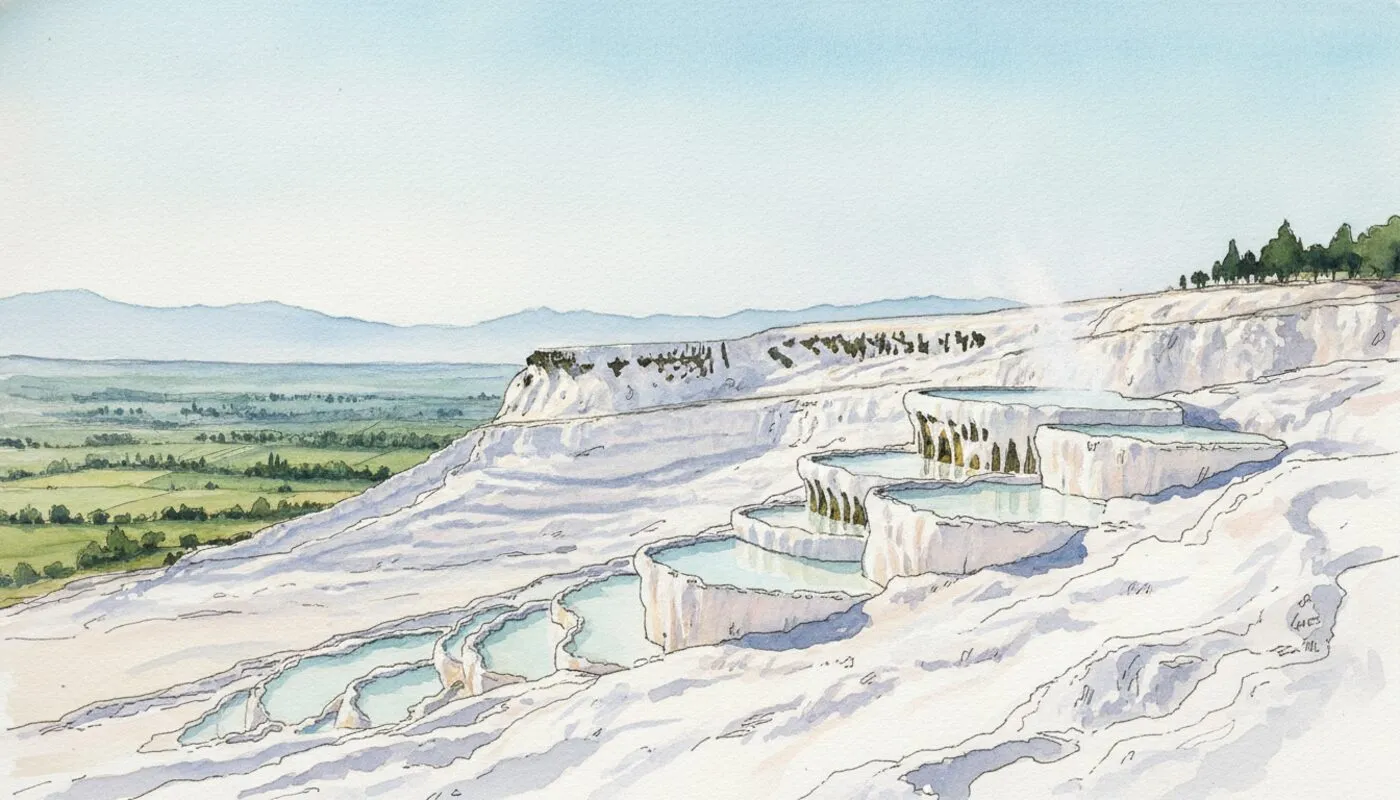
Around half past ten, the buses from other cities pull in. Doors open, guides raise their little flags, and within twenty minutes the white hill hums like a market street. Most of the people stepping onto the calcite right now will know Pamukkale exactly like this: bright, hot and shared with a few thousand strangers.
Now rewind the same day two and a half hours. At 08:00, when the gates open, the hill belongs to whoever bothered to set an alarm. Some mornings that is a few dozen people spread over an entire hillside of pools. The water lies flat as glass, a little steam drifts off the warm channels, and the loudest sound is water moving over stone. Same place, same ticket. A different Pamukkale.
We live at the foot of this hill, and when guests stay with us, the early start is the one thing we insist on gently. Nobody has ever come back down at ten regretting it.
The sunrise nobody sees
Let’s clear up the internet’s favourite Pamukkale fantasy first. In summer there is no watching the sunrise from the terraces: the sun climbs over the valley around six, and the gates open at 08:00. By the time you step onto the calcite, daylight is already two hours old. Anyone selling you a summer “sunrise on the travertines” is selling a photo taken from a balloon basket, which is in fact the one place the real sunrise happens.
Midwinter is the quiet exception. In December and January the sun rises not long after the gates do, and the handful of visitors who show up at opening walk into low, pink, sideways light with the terraces nearly to themselves. It is cold, the water steams twice as hard, and it might be the most underrated hour of the whole year here.
But here is the honest part: morning at Pamukkale was never really about the sunrise. It is about what the hill is like before it has an audience.
What 08:00 actually buys you
The first thing you notice is underfoot. Shoes come off where the calcite begins, and in the early hours the stone still holds the night’s cool, ridged and firm, warm only in the ribbons where the thermal water runs. By afternoon in August that same surface can feel like a griddle; at eight it is simply pleasant, and you can take the barefoot climb at a stroll instead of a hop.
The second thing is the water. Nobody has waded through the pools yet, so they sit perfectly still and do their mirror trick with the sky. The famous blue-white photographs that look impossible are mostly just early.
The third thing is the quiet. For an hour, maybe two, you can stand in a landscape that took thousands of years to build and hear nothing manufactured at all. That hour recalibrates what the rest of the day means; even the crowds, when they come, stop feeling like a problem and start feeling like closing time at a party you attended early.
Morning or evening, honestly
Evening has its own argument, and it is a good one. The last hour before closing brings the warm, golden light the postcards are printed with, and the day-trip crowds drain away as the buses leave. If you want the classic photograph, evening light wins and we will not pretend otherwise.
So the real answer is a choice about what you want to take home. The image: come late. The place itself, still and cool and yours: come early. And if you can possibly stay a night, do both ends of the day with a swim over sunken columns in between; that rhythm is exactly why we keep telling people two days here are not too many.
Making the early start work
The practical part is short. Sunrise, sunset and the soft-light windows shift with the calendar, so check your exact date in the golden-hour planner before you set the alarm. Opening hours and tickets are on the tickets page, and the month-by-month picture lives on when to visit. Bring nothing you would not carry in one hand: shoes dangling from your fingers, water, a hat for later. The hill provides the rest.
One last thing we tell every guest the night before: the alarm will feel like a mistake. It stops feeling like one about four steps past the gate.
Guided tours and day trips in Pamukkale
Skip the planning. Pick a theme below to compare guided tours, balloon rides and day-trip packages, many with instant confirmation and free cancellation.
- Pamukkale + Hierapolis day tour
- Hot air balloon ride
- Sunset tour
- Day trip from İzmir
- Day trip from Antalya
- Cleopatra antique pool
Common questions
Can you watch the sunrise from the travertines?
In summer, no. The gates open at 08:00 and the sun has been up since around six, so a true sunrise on the terraces is not on the menu. Midwinter is the quiet exception: the sun comes up not long after the gates do, and the first visitors walk into genuinely low, pink light. The only summer sunrise here happens from a hot-air balloon basket.
How early should I be at the gate?
At opening, or as close to it as your morning allows. The buses from other cities start arriving between ten and half past, so the gap between the gate and the first crowd is roughly two hours. Every minute you sleep in comes out of that gap.
Is morning or evening better for photos?
Evening, honestly, if the photograph is the point: the last hour before closing has the warm colour the postcards are made of. Morning wins a different prize, frames with nobody in them and pools as still as glass. Decide what you want to carry home and pick your hour accordingly.