
Pamukkale Barefoot Rule: Terrain, Safety and Tips
What the mandatory barefoot rule at Pamukkale actually covers, where it applies, slippery and rough patches, and practical tips for sensitive feet or injuries.
Updated · 5 min read
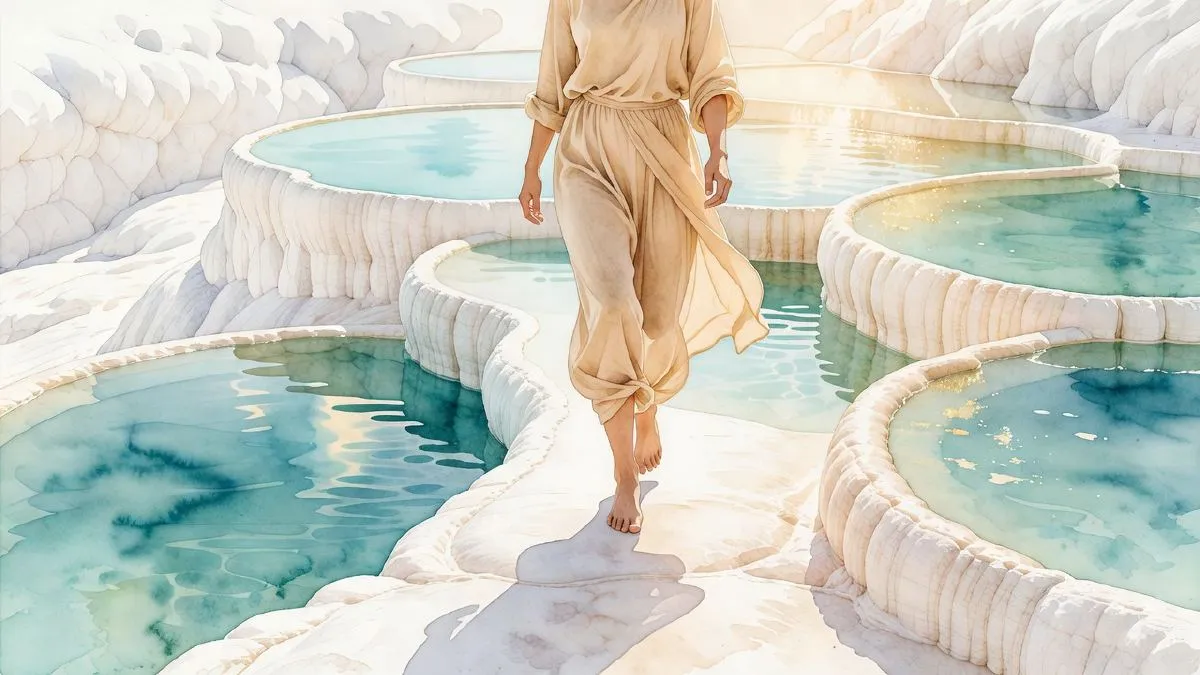
At Pamukkale, shoes come off before the white terraces begin, and it isn’t a style choice, it’s a rule that protects the travertine itself. This guide covers where the barefoot rule applies, what the ground actually feels like underfoot, and how to handle it if you have sensitive feet, an injury, or a condition that makes balance harder. For general footwear and clothing advice for the rest of your day, see our guide on what to wear at Pamukkale , this page focuses only on the barefoot rule itself.
Why shoes come off, and exactly where the rule applies
The white travertine terraces of Pamukkale are made of calcium carbonate deposits , a delicate, porous mineral buildup formed when warm, mineral-rich spring water flows across the landscape and evaporates, leaving layers of white crust behind. This process unfolds over thousands of years; our guide to the Pamukkale travertines covers how the formations built up. Rubber-soled and treaded shoes scour this surface, leaving dark marks and damaging the mineral layer with each footstep. To protect these irreplaceable deposits, now designated as a UNESCO World Heritage site, walking barefoot on the main terraces is mandatory. The rule exists because the mineral crust cannot regenerate at the pace of modern visitor traffic; once damaged, the marks are permanent.
The barefoot requirement applies strictly to the main travertine pools and their surrounding terraced fields. From the entrance, paved paths allow regular footwear for the first section. Once you reach the point where the cascading pools begin , the boundary is signposted , shoes must come off. The barefoot zone extends across the upper white terraces and drainage fields. Shoes go back on before exiting, typically at designated zones near the parking areas, and the transition points are usually clearly marked on the ground, with most visitors simply following the flow of people ahead of them.
For shoe storage, visitors typically carry footwear in a daypack, shoulder bag, or plastic carrier. Some areas have small cubbies or racks, but these are not guaranteed and often fill quickly during peak hours. A lightweight canvas tote or plastic bag tucked into your day bag solves the problem completely and takes almost no space.
If you wear shoes on the main terraces or ignore the barefoot boundaries, staff will ask you to remove them. Persistent disregard can result in being denied further access to the site. The rule applies equally to all visitors, and park staff enforce it consistently.
The ground itself: slippery, rough, and hot
You will meet three separate problems on the terrace, usually one at a time. The wet parts are the ones to take seriously. Where water crosses the travertine, a thin mineral film coats the stone, and a bare foot slides the way it would on wet soap. The film covers the whole flow path, so there is no clean line to step around. You do not feel it until your foot is already moving, so the adjustment happens before the slip, not after. Visitors who make it across comfortably tend to land with the whole sole flat rather than the toes, let their weight settle back over the heel, and shorten each step until the wet stretch ends. Walking on the balls of the feet shrinks the contact patch and makes the slide worse.
The dry parts are the opposite problem. In some sections the calcite dries into a rough crust, coarse as sandpaper fused onto the stone. It will not cut you, but the pressure gathers in the sole, and after a hundred meters the walk feels like gravel. Picking out the flatter patches and slowing the pace the same way as on the wet stretches makes this part more bearable. This section of the terrace never gets water, so there is no way around the texture itself.
Heat is the one problem you can plan around. White travertine reflects the morning sun and then absorbs it. Around midday in summer the stone gets hot enough that soles burn, and the shallow pools sitting on it turn into bathwater. Going early or late avoids this altogether; our guide on the best time to visit lays out the exact hours worth building your day around. The same timing that keeps you ahead of the crowds also keeps your feet off hot stone.
In winter you meet the problems in a different order. The air and the rock are cold, but the water feeding the terraces is thermal, so a single step crosses from cold stone into warm flow. It surprises more than it hurts, but it changes what you expect from the first touch. A pool that looks calm and turquoise can be noticeably warmer than the ground around it.
Practical tips for sensitive feet and what to bring
Once on the terraces, a quick-dry towel or microfiber cloth earns its space in your bag. The pools connect, and stepping from warm mineral water onto sun-warmed rock means wet feet meet rough limestone. A small towel dries your soles between pools and cuts down on that slippery-slide feeling. Cuts, blisters, or ingrown nails are worth covering with a waterproof bandage before you go in, since the calcium-rich water doesn’t sting open wounds but the rough surfaces do. This isn’t medical advice, just basic wound protection.
For diabetes, plantar fasciitis, or pregnancy, the main adjustment is pace and balance. Visitors managing these conditions usually shorten their steps on uneven sections, keep their weight centered, and let their arms help with balance rather than rushing across. The mineral deposits create small ridges that catch flat-footed walkers off guard. A walking pole isn’t practical here, so slow movement and planting both feet before changing direction do the same job.
The pools carry a hygiene reality worth a moment’s thought, since thousands of visitors pass through daily. Open wounds and skin infections deserve extra caution, and anyone with a fresh cut or a compromised immune system might choose to skip the pools that day. If your plans also include the separate antique pool, the same towel-and-bandage habits carry over there too.
Bare feet work for most people without any planning at all. A light towel and a bag for your shoes tucked into your day pack before you set out are usually all it takes, and the barefoot walk stays part of the experience instead of a problem you solve halfway through the visit.
Guided tours and day trips in Pamukkale
Skip the planning. Pick a theme below to compare guided tours, balloon rides and day-trip packages, many with instant confirmation and free cancellation.
- Pamukkale + Hierapolis day tour
- Hot air balloon ride
- Sunset tour
- Day trip from İzmir
- Day trip from Antalya
- Cleopatra antique pool