
How Many Days in Pamukkale? Realistic Itinerary
Wondering how many days to spend in Pamukkale? Compare a quick 3-4 hour visit, a full day route through Hierapolis, and a two-day plan with Laodikeia.
Updated
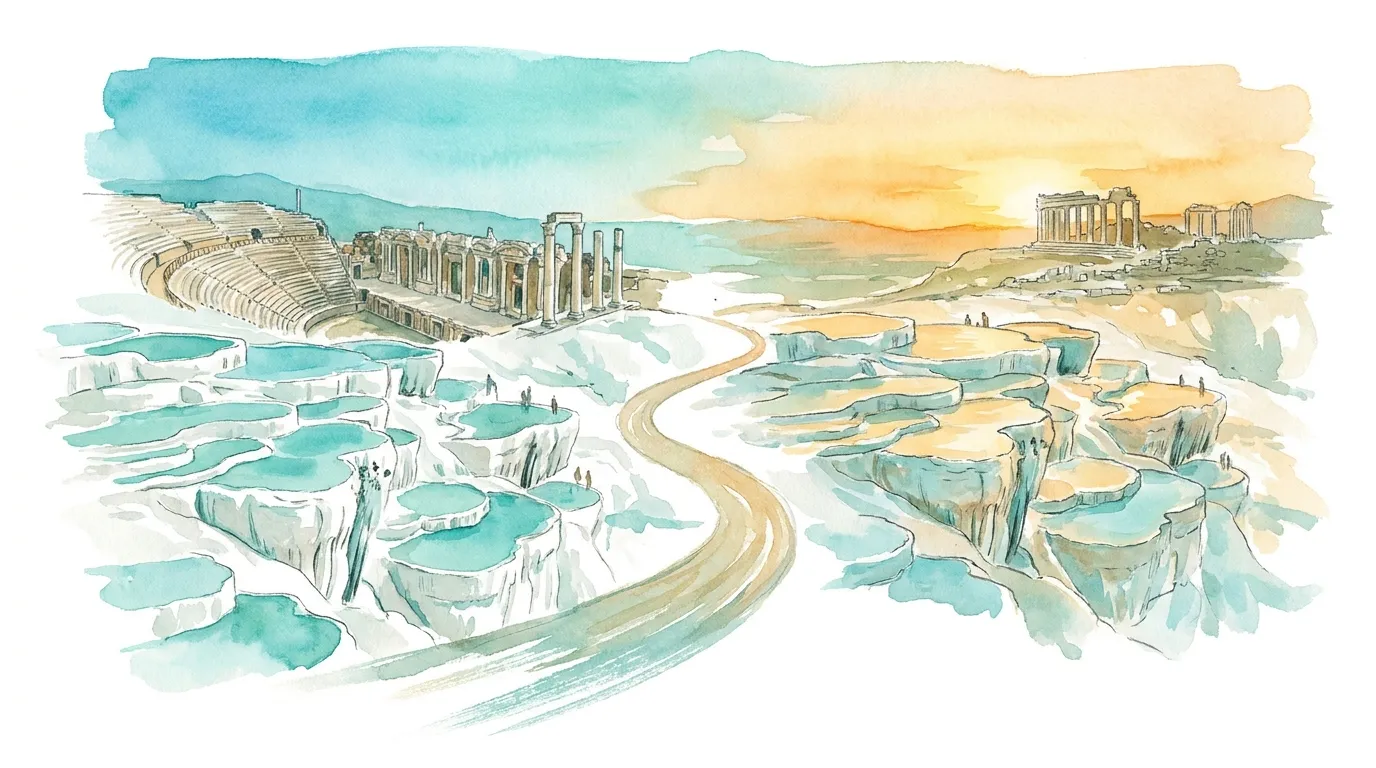
If you only have three or four hours between a coach transfer, you’ll see the white terraces and not much else. A full day is what most independent travelers actually need to walk the travertines, cross into Hierapolis, and still make it to the Antique Pool before the light drops. Stay two days and Laodikeia, Kaklık Cave, and a slower Denizli evening fit in without anyone rushing. Season plays into this too, since a July afternoon on open limestone asks more of your legs and your patience than a mild October morning does. Which one is right for you depends less on how much you want to see and more on which gate you walk in from, and what month it is.
Three to Four Hours: What a Day-Trip Coach Actually Shows You
This is the window most package tours give you, and it’s built around the bus schedule, not the site. You enter, you walk the white terraces, you get the photo, and you’re back on the bus. There’s usually a quick look at the theatre from a distance, but rarely enough time to walk down into it, and almost never enough for the Antique Pool or the Nekropol at the north end of Hierapolis. Most coaches arrive mid-morning and regroup at the bus park within the window they were given, so the pace is set by the driver’s schedule rather than by curiosity.
If this is your slot, know its limits going in rather than finding out on the ground. Hierapolis is a full ancient city, not a backdrop for the travertines, and our guide to the site gives you a sense of how spread out it actually is, so you can pick the two or three points worth prioritizing instead of trying to see all of it in a sprint. Footwear matters here too, since the calcified terraces have to be crossed barefoot in the wet sections; what to wear in Pamukkale covers that before you’re standing at the entrance figuring it out.
A Full Day: The Route That Covers Hierapolis Properly
A full day is the version that actually matches what’s on site. The order matters as much as the hours: entering from the South Gate and walking down means you cover the travertines on a gentle descent instead of climbing them in the heat, and you end up closer to the Antique Pool and the town center for your exit. Aim to be past the South Gate before the tour buses arrive around mid-morning, and the terraces feel like a quiet path rather than a queue.
Roughly, this is what each stop takes if you’re not rushing:
| Stop | Time needed |
|---|---|
| Travertine walk, South Gate toward the pool | 45–60 min |
| Theatre climb and rest at the top | 40 min |
| Nekropol and the walk back down | 30–40 min |
| Antique Pool, with a swim | 90 min |
Add transitions between these and a full day fills naturally, without anyone standing around waiting for the group. Check your ticket type before you go, since a single-entry ticket won’t let you leave for lunch in Karahayit and come back later, and that changes how you should sequence the day.
From June to September, the open, shadeless terraces get genuinely hard to walk around noon. Splitting the visit, early morning at the South Gate and the second half in late afternoon, works better than pushing through the middle of the day. Hierapolis has also been running evening hours in recent seasons, with the ancient city lit after dark, which gives you a cooler second visit after dinner instead of a single long stretch in the sun. Opening hours and the exact evening schedule change by year, so confirm the current one on the official ticket page before you plan around it.
Two Days: When Staying Overnight Pays Off
One day is enough for Pamukkale and Hierapolis on their own. A second day is what opens up the wider area, and it’s worth it if ancient sites without the crowds interest you more than another hour at the pool. Laodikeia, a short drive away, is a large Roman city that gets a fraction of the visitors Hierapolis does, and the guide to it is a reasonable next stop if your first day already felt complete. Kaklık Cave, sometimes described as a small Pamukkale underground, fits into a slower morning before heading back toward Denizli for a proper meal rather than a tour-bus lunch stop.
Staying the night also removes the time pressure entirely. You’re not racing a return transfer, so the early morning travertine walk, before the coach groups arrive, and a calmer evening visit both become realistic in the same trip. If two days is where you’re landing, where to stay in Pamukkale walks through the Karahayit versus Pamukkale village question, which matters more for a two-day plan than a same-day one.
So, How Many Days Should You Plan For?
Three to four hours gets you the terraces and little else. A full day is the version that actually matches Hierapolis and the pool without cutting either short, and it’s what we’d suggest if you can only give the site one visit. Two days makes sense once Laodikeia, Kaklık, or a slower Denizli stop start to sound more interesting than a second lap of the travertines.
If a second day is looking like the better fit for your trip, start with where to stay in Pamukkale before you fix your dates, since the base you pick changes how early you can realistically get to the South Gate.
How many days should Pamukkale get?
Pick 1, 2 or 3 days and get the hour-by-hour program we would walk with you, gate-opening starts, quiet corners, and where to eat.
How many days do you have?1 day2 days3 days